Air conditioning · Cicero & Onondaga County
A/C repair and installation in Cicero and CNY
Repairs, new installs and seasonal tune-ups, certified on every make and model. When a CNY heat wave hits, the shop that already knows your system is the one that gets there first.
After-hours appointments · HVAC certified and fully insured · Free estimates & financing on new systems
Free
Estimates
Seven out of every ten repair calls never had to happen
We went back through our own service call database and counted. Around 70% of the repairs we get called out for could have been caught during a routine tune-up: a dirty coil, a weak capacitor, a slow refrigerant leak, a clogged drain line. All of them cheap to catch and expensive to ignore.
Three ways we handle your air conditioning:
Whether it quit this morning or you are planning ahead for July.
Free
In-home estimate on a new A/C
We come out, measure, and give you a written price on a new air conditioner sized to your house, before you commit to anything.
Senior and military discounts available. Just mention it when you call.
Financing
Available on new installations
Spread the cost of a new A/C system instead of paying it all at once. Ask about matching a new outdoor unit to the furnace you already have.
Financing available to qualified buyers.
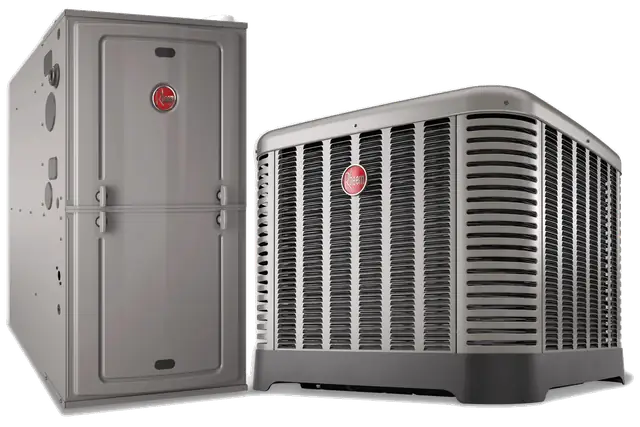
Thinking about replacing instead of repairing?
If your air conditioner is fifteen years old, still running R-22, and needs a second repair this season, the math usually stops working. We will give you the honest version of that math, in your own basement, for free.
- Free in-home estimate with no pressure and no showroom markup
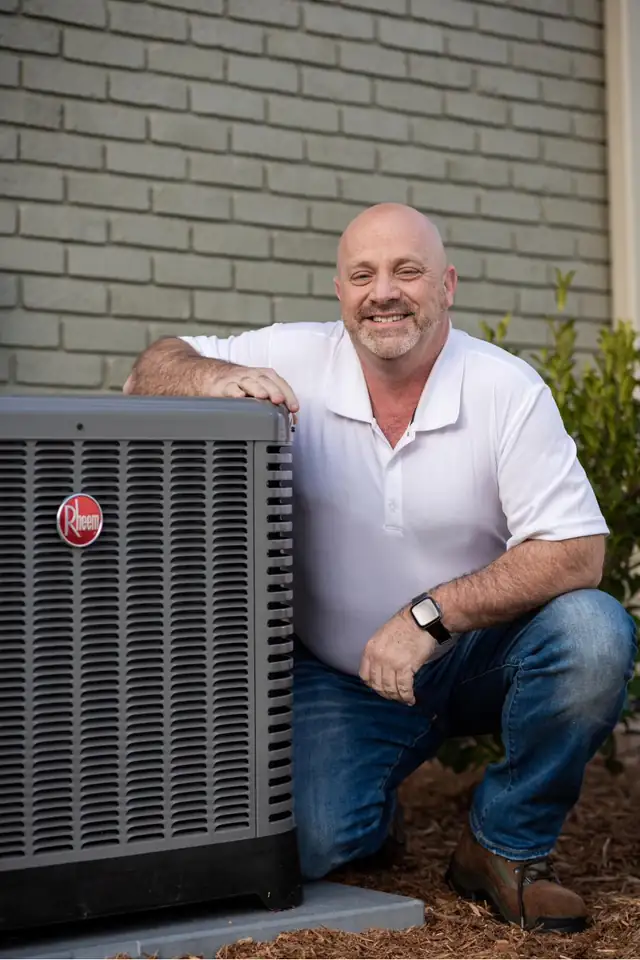
- Rheem and WeatherKing equipment, sized to your house
- Financing available so the payment fits the month, not the summer
- Old equipment hauled away, and all work guaranteed
- High-efficiency filtration and air cleaners available
Got us in quickly. Cleaned and serviced our AC. Very knowledgeable and walked us through the options. Great price.
Melanie D. — A/C Clean & Check · Read all 80 Google reviews
Cooling questions we get every summer
Something is wrong right now:
Usually one of four things: a filter that has not been changed in a year, an outdoor coil packed with cottonwood and grass clippings, a refrigerant charge that has leaked down, or a frozen evaporator coil upstream of all of it. The system keeps running and your National Grid bill keeps climbing while it fails to actually cool. Shut it off, put the fan on to thaw any ice, and call us.
Check the thermostat batteries, the breaker in the panel, and the outdoor disconnect box next to the condenser before you call, because those three are free to rule out. After that, the usual culprits are a failed run capacitor, a tripped float switch in a full condensate pan, or a contactor that has burned. Those are all same-day repairs for us.
That is almost always a plugged condensate drain line, and it is worth calling about quickly, because the water it backs up into can do more damage to a finished basement than the repair costs. Clearing the drain is part of every Clean and Check we do.
It depends on the size of your house, the ductwork you already have, and the efficiency you want, which is exactly why we do not publish one number and why anyone who quotes you over the phone is guessing. We will come out, measure, and give you a written price for free. Financing is available on new installations.
Spring, before the first hot stretch. Once CNY hits a run of 90-degree days everybody calls at once and the whole trade backs up. April and May appointments are easy to get; the third week of July is not.
Buying, sizing and efficiency:
No, and this is the most common mistake we undo. An oversized unit cools the air fast, then shuts off before enough air has crossed the indoor coil to pull the humidity out. You get short cycles, a clammy house, more wear on the equipment and a higher bill. An air conditioner works best on long, steady runs, which is why we do a load calculation instead of guessing.
We do not recommend it. Pairing a new condenser with an old indoor coil can cost you up to 15% of the unit’s efficiency, may shorten its life, and voids most manufacturers’ warranties. The indoor cooling coil should always be replaced along with the outdoor unit.
Because every component is designed to work with the others. Properly matched and sized to your house, the system holds correct cycle times, controls humidity and runs quieter. Matched also means efficient: most systems people buy are too big for the home, which burns energy you never needed to spend.
SEER is the Seasonal Energy Efficiency Rating, or how much cooling you get per unit of electricity. Higher is cheaper to run. Two air conditioners can look identical and have very different SEER numbers, so on a replacement it is worth asking what the payback looks like at your usage. We can show you the difference in real dollars.
Yes. R-22, what most people call Freon, has been phased down for years and is no longer used in new equipment. If your system still runs R-22, refrigerant for repairs gets scarcer and pricier every season, which is often what tips an older unit from repair to replace. New equipment uses environmentally sound refrigerant instead.
A variable speed fan runs at different speeds instead of just on or off, usually loafing along at a low speed for steady, quiet airflow and ramping up only when it is genuinely hot. Two-stage cooling works the same way at the compressor. Both hold humidity and temperature steadier, run quieter, and use less energy than a single-stage unit slamming on and off.
Reasonable worry. The indoor coil condenses water into a collection pan, and if that pan clogs the standing water grows mold that your ducts then distribute through the house. Three things prevent it: routine maintenance to keep the pan draining, an ultraviolet light at the coil to kill growth, and a good filter changed on schedule.
A high-efficiency air cleaner can pull out the large majority of pollen and spores along with household dust, dirt and smoke. Pair it with a filter you actually change on schedule. In winter a whole-house humidifier helps too, because humid air feels warmer, so you can set the thermostat lower and still be comfortable.
In summer, 75 to 80 degrees, and as high as you find comfortable. Roughly every 1 degree of change is about 10% on your cooling costs, so nudging from 75 to 76 is real money over a Central New York summer.
Sound ratings have improved a lot. It takes about 3 decibels before the average ear notices any difference at all and about 10 to actually double the loudness, so the gap between an old unit and a modern one is bigger than the numbers look. We can show you the sound ratings across the line.
Get the A/C sorted before the next heat wave
Repairs, tune-ups, and free estimates on new systems across Cicero and Onondaga County.